








Offshore IT Staffing for New Zealand MSPs and IT Service Providers

Access more IT talent. Build capability faster. Create a more scalable business.

Dijital Team helps New Zealand MSPs and IT Service Providers build dedicated offshore IT teams in Sri Lanka. Your team members work exclusively for your business. They use your systems, follow your processes, learn your customers and become an extension of your existing New Zealand team.

All-inclusive pricing in NZ dollars · Level 2 Engineers from NZ$48,560 a year · 90 days' notice, no lock-in

120+
businesses supported
350+
team members in Sri Lanka
ISO 27001
certified information security
Trusted by MSPs & TSPs across Australia, New Zealand and the UK
Digit ITProcisionTech EngineCROFTIBurger ITLucid ITA1 TechnologiesQuadtechKPTechStellar SystemsDanetSherpaTech
The challenge

New Zealand's talent market should not limit your growth

Finding experienced technology professionals in New Zealand can be difficult. For growing MSPs and IT Service Providers, the challenge is even greater when you need specialist skills across service desk, cloud, automation, cybersecurity, networking, data and software development.

New Zealand has an innovative and highly capable technology sector. But it is also a relatively small labour market. You are competing for the same people as larger MSPs, software companies, enterprises, consultancies and government organisations.

That can make growth dependent on your ability to find the next person. Offshore IT staffing gives New Zealand IT businesses another way to solve it: build additional capability in Sri Lanka and integrate those people directly into your existing business.

Smiling technology professional working on a laptop in a bright office
Sound familiar?
  • You win a new customer but need another Service Desk Engineer.
  • Your project pipeline grows but your senior engineers are already at capacity.
  • You invest in Rewst, Pia or another automation platform, but nobody has time to implement it properly.
  • Customers ask about AI, cybersecurity or data services before you can deliver them at scale.
These are not recruitment problems. They are capacity constraints.
Rethink the model

Why New Zealand MSPs are looking offshore

The traditional MSP growth model is simple. Win more customers. Add more engineers. Repeat. The difficulty is that employment costs rise alongside revenue, so growth does not always produce the improvement in profitability MSP owners expect.

Win more customers
Add more engineers
Repeat
Costs rise with revenue
The traditional growth model

Rethink where work happens

The objective should not simply be to replace New Zealand employees with less expensive overseas employees. A better approach is to decide where different types of work should be performed.

Free up your NZ people

Your experienced New Zealand team spend more time on customer relationships, consulting, architecture, projects, account management and strategy.

Add operational capacity offshore

Your offshore team adds capacity across service desk, administration, automation and engineering. The result is a better combination of capability, capacity and cost, and a far more scalable MSP.

Your team, not a service

Offshore staffing is different from outsourcing

With traditional outsourcing, you hand responsibility for a function or outcome to another provider. That provider decides how the service is delivered and may share resources across many customers. That is not the Dijital Team model. We help you build your own dedicated team offshore.
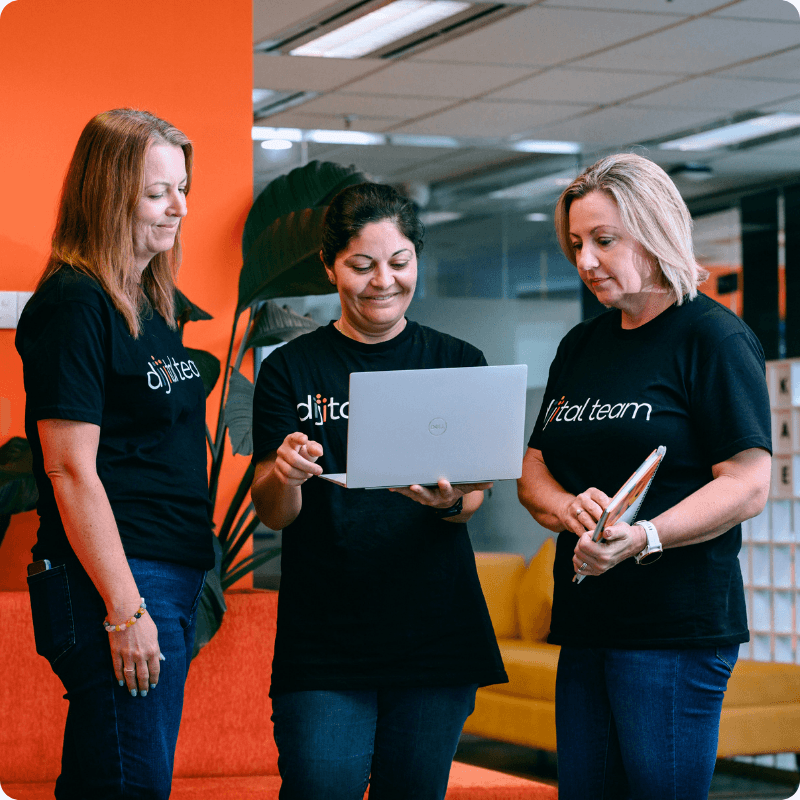
Three Dijital Team members in branded t-shirts reviewing work on a laptop
Only you. Not shared across a pool of MSPs.

Your Dijital Team member works exclusively for your business

  • They work inside your HaloPSA, ConnectWise or Autotask environment.
  • They use your RMM.
  • They follow your documentation standards and escalation procedures.
  • They attend your Teams meetings and technical huddles.
  • They learn your customers.
  • They take part in your company culture.
You decide what they do and how they work. Dijital Team provides the infrastructure around them. The result is not an outsourced service. It is additional capability inside your business.
Roles

What IT roles can New Zealand businesses hire offshore?

Offshore staffing is no longer limited to basic help desk or administrative positions. New Zealand MSPs use Dijital Team to build capability across a broad range of technical and business roles.

01 / 10

L1 and L2 Service Desk Engineers

Service desk is often the most logical starting point for an MSP considering offshore staffing. A dedicated offshore Service Desk Engineer becomes part of your existing support operation, handling tickets, troubleshooting issues, communicating with customers and following your escalation procedures. More capacity at L1 and L2 lets senior New Zealand engineers spend less time on routine tickets and more on complex work and projects.

Skills and platforms
HaloPSAConnectWiseAutotaskNinjaOneMicrosoft 365
Dedicated to your MSP. Recruited and assessed by us, interviewed and chosen by you.

Built for MSPs, not generic offshore staffing

There is a big difference between recruiting an IT professional and recruiting someone who can succeed inside an MSP.

  • They work across multiple customer environments.
  • They work within SLAs and manage competing priorities.
  • They document their work and escalate issues appropriately.
  • They communicate well, across a broad technology stack rather than one corporate environment.

That is why Dijital Team specialises in helping MSPs and technology businesses build offshore teams. Technical skills matter, but understanding the pace, culture and expectations of an MSP matters as well.

Technologies and platforms our team members work with

PSAHaloPSA, Autotask, ConnectWise
RMMNinjaOne and other major RMM platforms
MicrosoftMicrosoft 365, Azure, Entra ID, Intune, Azure Virtual Desktop, PowerShell, Power Platform, Microsoft Fabric
AutomationRewst, Pia, n8n
Network & securityNetworking and cybersecurity platforms

What MSP owners say

Read more success stories →
They understand MSP businesses. They make sure that the talent that we get really work and fit within our business.
Ben Dampney, Digit ITBen DampneyDigit IT
We were struggling to find an L3 Engineer with the right skills both locally and in the Philippines. Dijital Team were able to find the level of expertise we needed.
Paul Foley, ProcisionPaul FoleyProcision
We gained access to offshore specialists (particularly in Microsoft Power Platform) who could immediately fill our capability gaps.
Matt Hinge, Tech Engine AustraliaMatt HingeTech Engine Australia
How your offshore team fits

Designed to work as part of your business, not alongside it

Dijital Team member working on a laptop in the office

Build specialist capability earlier

One of the biggest benefits of offshoring for a smaller New Zealand MSP is building specialist capability earlier.

Say you know you need an Automation Engineer. The business case is clear: less service desk workload, more consistency, less manual admin and more customers per engineer. But hiring that specialist locally is hard to justify at your current scale. The same applies to cybersecurity, Power Platform, data engineering and software development.

Offshoring changes the economics. You do not just use it to support today's business. You use it to build tomorrow's MSP.

Your offshore team works inside your MSP

A good offshore strategy should not create another operational silo. Your offshore team members join daily meetings, team training, one-on-ones, performance reviews and company activities. The closer they are integrated, the less the physical distance matters.

We encourage customers to think of them not as “offshore resources”, but as members of their team who happen to work from Sri Lanka.

YOUR
PSA
YOUR
RMM
YOUR
Documentation
YOUR
Processes
YOUR
Customers
The straight answer

Offshore IT teams aligned to New Zealand working hours

Distance does not mean your teams need to work independently. Rosters are built around your operating requirements: some MSPs want full alignment with the New Zealand working day, others use the time difference to extend their service hours. Sri Lanka is 7.5 hours behind New Zealand during daylight saving and 6.5 hours behind the rest of the year.

Now in Auckland--:--
Now in Colombo--:--SLST · UTC+5:30
Auckland
NZ day 08:30–17:00
Colombo
00:0006:0012:0018:0024:00
Shift in Colombo01:00–09:30
Your team member works (NZ time)08:30–17:00
Overlap with your NZ day8.5 hours

Full NZ hours

Your offshore engineer is on the queue whenever your New Zealand team is. In Colombo that is a night shift: 01:00–09:30 during NZ daylight saving and 02:00–10:30 the rest of the year.

Early overlap shift

An early start in Colombo gives you several shared hours every NZ afternoon on the same queue, plus cover into your evening. The example shown is 06:00–14:30 Colombo time.

After-hours cover

A normal Colombo working day covers your NZ late afternoon and evening, so customers get a response after your team has gone home, and notes are waiting the next morning.

There is not one correct model. The right structure depends on your customers, service model and objectives. What matters is that your offshore team members are designed into your operating model, not left outside it. We work out the right roster with you for each role.

Dijital Team

How Dijital Team makes it work

You leadYour NZ team
Dedicated to youYour team member in Sri Lanka
Works inYour PSA · RMM · docs
We look after  recruitment · employment · payroll · HR · the office · equipment · local support
01

Recruitment designed around your business

Offshore recruitment should not mean picking someone from a database of available people. We start by understanding what you need: technical capability, MSP experience, communication, working hours, personality, customer interaction and the outcomes you expect.

Depending on the role, that includes talent acquisition screening, a communication assessment, technical and cultural assessments and technical interviews. You meet the shortlist and make the final decision.

Tell us about the role you need →
02

One monthly cost, infrastructure included

Rather than recruiting someone and then discovering separate costs for the workplace, HR, equipment and everything else, you pay one predictable price per role, invoiced in your local currency. That makes it easy to model future staffing and the impact on gross margin.

Annual cost per role · all-inclusive · NZD
Admin AssistantNZ$30,490
Level 2 EngineerNZ$48,560
Data EngineerNZ$54,205
Senior .NET EngineerNZ$60,980
Price up your first hire →
03

Build offshore without an overseas office

You could set up your own offshore operation, but that means local employment, payroll, contracts, HR, management, technology, equipment, connectivity, offices, security and engagement. For an MSP that needs one, three or five people, that rarely makes sense.

Dijital Team has already built it. We provide the local environment while you build the team, starting with one person and expanding as you grow.

Security and compliance

Security and privacy for New Zealand businesses

Giving overseas team members access to systems and customer information needs to be managed carefully. Offshore staffing should follow the same security principles you'd use for employees working anywhere else in your organisation.

Dijital Team is ISO 27001 certified and operates within an established information security management framework. Access is structured around your requirements: identity management, multi-factor authentication, conditional access, least-privilege access, endpoint controls and customer-specific security policies.

New Zealand organisations also need to consider their obligations under the Privacy Act 2020 when personal information is disclosed outside New Zealand. The right structure depends on the relationship, the information being accessed and how it is processed, so privacy and security should be part of the design of your offshore model, not an afterthought.

Talk to us about your security requirements →
Built in from day one
  • ISO 27001 certified
  • Multi-factor authentication
  • Least-privilege access
  • Endpoint controls
  • Customer-specific security policies

Why Sri Lanka for New Zealand offshore IT staffing?

New Zealand businesses have plenty of offshore locations to choose from. We built our delivery capability in Sri Lanka for its combination of technology skills, education, English communication, culture and commercial value.
01

Technical depth

Sri Lanka has a well-established technology workforce across software development, infrastructure, Microsoft technologies, cybersecurity, networking, data and automation, including capabilities that are hard or expensive to build from the NZ talent market alone.

02

Professional English

English is widely used in Sri Lanka's professional technology sector, which matters when your team members are working with New Zealand colleagues or customers.

03

A real workplace

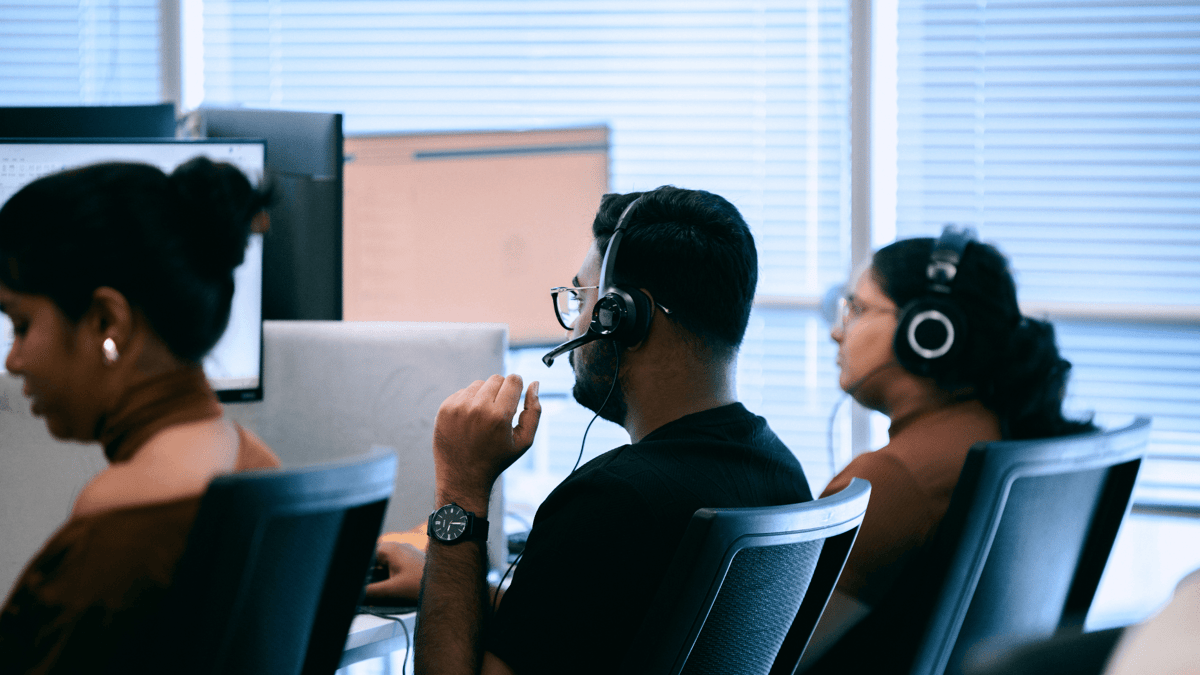
Your team members work from Dijital Team offices, not as isolated contractors working from home.

04

Built for the long term

A professional workplace, reliable infrastructure, local HR support, colleagues and the wider Dijital Team community: an environment designed for long-term teams, not temporary overseas positions.

Where to start

Start with the constraint, not with offshoring

You do not need to offshore an entire function. The strongest offshore strategies start with a single business problem. Ask: where is capacity holding us back today?

Maybe your senior engineers spend too much time on escalations. Projects take too long to schedule. Nobody has time to build the automations you have identified. Your sales team spends more time on quotes than prospects. Or you want to launch a cybersecurity or data service but can't justify the full capability locally.

  1. 1Find where capacity is holding you back.
  2. 2Choose the role that removes that constraint.
  3. 3Recruit one great person.
  4. 4Integrate them into the business.
  5. 5Measure the outcome, then decide what comes next.

Offshore staffing can improve more than labour cost

The easy business case compares one New Zealand role with one Sri Lankan role. That only captures part of it. The bigger question is what happens to the rest of the business once you create capacity: utilisation, customer experience, project delivery and, ultimately, MSP profitability.

QUESTION 1
If an offshore L2 Engineer takes routine tickets away from your senior engineers.
What can those senior engineers now achieve?
QUESTION 2
If a Sales Administrator takes quoting and procurement away from your account managers.
How many more customer conversations can they have?
QUESTION 3
If an Automation Engineer removes hundreds of repetitive activities.
How much more customer capacity can your service desk support?
QUESTION 4
If a Project Engineer helps clear your project backlog.
How quickly can you invoice completed work?
Explore the MSP Profitability Hub →

Offshore staffing for Auckland, Wellington, Christchurch and across New Zealand

Your offshore team does not need to be near your office to be part of your business. That's especially valuable for regional MSPs with an even smaller local pool of experienced engineers. Instead of letting geography decide who you can hire, build a team around the skills your business needs.

  • Auckland
  • Wellington
  • Christchurch
  • Hamilton
  • Tauranga
  • Regional New Zealand

Build a more scalable New Zealand MSP

Imagine your MSP if recruiting locally was no longer the main constraint on building capability.

Your service desk has enough capacity.
Senior engineers have time for projects.
Your automation roadmap is actually being implemented.
Projects are not delayed because one specialist is unavailable.
Salespeople spend their days talking to customers, not processing admin.
You can launch cybersecurity, data and AI services before every capability has to be built at full New Zealand employment cost.

That is where offshore IT staffing becomes more than a recruitment strategy. It becomes part of your business model.

Talk to us about your first hire
FAQs

FAQs about offshore IT staffing in New Zealand

Something we haven't answered? Tell us about your first hire and we'll come back to you.

Ask us directly

What is offshore IT staffing?

Offshore IT staffing means employing technology professionals in another country who work as members of your existing business. With Dijital Team, team members are dedicated to one customer and work inside your systems and processes. We provide the recruitment, employment and operational infrastructure in Sri Lanka, and you manage the role and its day-to-day priorities.

What is the difference between offshore staffing and outsourcing?

Outsourcing usually means engaging another organisation to take responsibility for a service or outcome. Offshore staffing adds people to your existing team. With Dijital Team, you keep control of how work is done, which systems your team members use and how they work with colleagues and customers.

Is offshore IT staffing suitable for New Zealand MSPs?

Yes. MSPs are well suited to offshore staffing because many technical and operational functions fit established processes and cloud-based systems. Typical roles include Service Desk Engineers, Automation Engineers, Microsoft Engineers, Project Engineers, Network Engineers and business administration roles.

Can I hire only one offshore employee?

Yes. You don't need a large offshore team to start. Many businesses begin with one role aimed at an existing capacity constraint, then expand once they've proven the model internally.

What IT roles can New Zealand companies offshore?

L1 Service Desk Engineers, L2 and L3 Engineers, Project Engineers, Microsoft 365 and Azure Engineers, Network Engineers, Automation Engineers, Cybersecurity Analysts, Power Platform Developers, Data Engineers and Software Developers, plus operational roles such as Sales Administration, Procurement and Finance.

How much does an offshore IT engineer cost?

Each role has one all-inclusive price covering salary, recruitment, employment, the office, equipment, HR and support, invoiced monthly in your local currency. As a guide, a Level 2 Engineer is NZ$48,560 a year, a Data Engineer NZ$54,205 and a Senior .NET Engineer NZ$60,980.

Is there a minimum term or lock-in contract?

No. There are no three-year contracts. You can cancel for convenience at any time by giving 90 days' notice.

Can offshore employees work New Zealand hours?

Yes. Working hours are structured around your business. Sri Lanka is about 6.5 hours behind New Zealand Standard Time and 7.5 hours behind during daylight saving, so you can choose full NZ hours, an early overlap shift or after-hours cover from a normal Colombo day.

Will my offshore employee work for other companies?

No. Your team members work exclusively for your organisation, so they build deeper knowledge of your customers, systems, processes and culture.

Who manages my offshore team member?

You manage their role and day-to-day responsibilities, just as you would any other member of your team. Dijital Team provides local employment, HR support, office infrastructure and the employee experience in Sri Lanka.

Why Sri Lanka for offshore IT staffing?

Sri Lanka has a strong professional technology workforce across infrastructure, software development, cloud, networking, security, data and automation. It gives New Zealand technology companies access to experienced, English-speaking professionals, with economics that make larger and more specialised teams viable.

How does offshore staffing help MSP profitability?

It lowers the average cost of adding capacity and changes the mix of work your people do. More service desk capacity frees experienced NZ engineers for billable projects and consulting. A Sales Administrator gives account managers more selling time. An Automation Engineer reduces manual work across the business. The benefit goes beyond the difference in employment cost between two roles.

Is offshore staffing covered by the New Zealand Privacy Act?

New Zealand organisations remain responsible for their obligations under the Privacy Act 2020. Information Privacy Principle 12 covers certain disclosures of personal information outside New Zealand, and whether it applies depends on how information is accessed or processed and the relationship between the organisations involved. Privacy, security, contracts and access controls should all be part of the design of your offshore model.

How quickly can we build an offshore team?

It depends on the role, the skills required and the availability of suitable candidates. We start by understanding your requirements and recruit specifically for your organisation, rather than asking you to choose from a pool of available people.

How do I know whether offshoring is right for my MSP?

Start with your business constraints. Find where a lack of capacity is affecting growth, customer service, project delivery, automation or profitability. If another capable team member would remove that constraint, but local availability or cost makes the role hard to justify, offshore staffing may be the answer.

Ready to build your offshore IT team?

Your MSP's growth shouldn't depend on whether the next person you need happens to be available in Auckland, Wellington or Christchurch.

Dijital Team gives New Zealand MSPs and IT businesses access to a broader technology talent pool in Sri Lanka, while you keep control of your customers, systems, processes and culture. Start with one role. Build the capability you need. Create capacity for your existing team.

Dijital Team head office · Level 3, 144 Edward Street, Brisbane QLD 4000 · Working with MSPs across New Zealand
Prefer to pick a time? Book a call →

We'll only use your details to reply to this enquiry. Privacy policy